A Gentle Evening Wind-Down Routine

Some nights it's easy to go straight from answering one last message to lying in bed, wide awake, replaying the day. Sometimes your body is in bed but your head is still at your desk. What finally helped wasn't a fancy plan. The goal is a short, gentle evening wind-down routine you can do even when you're tired.
This post walks through a simple routine you can try most evenings. None of it takes long, and you don't need to do every step. Pick the parts that feel doable and start there.
Short on time? Our top picks: Insight Timer, Calm, Headspace and Moleskine notebooks. See all picks
Pick a finish time for screens and work
The first step is deciding when the day is "done." I mean done for work, done for email, and done for scrolling. Without a finish time, the evening just keeps stretching, and suddenly it's late and you haven't had a single quiet minute.
Mine is around an hour before I want to sleep. Some nights I miss it. That's fine. Having a time at all helps you notice when you're drifting, and that alone helps.
A few things that make the finish time easier to stick to:
- Set a quiet alarm on your phone with a kind label, like "wrap it up."
- Charge your phone outside the bedroom, or at least across the room.
- Write tomorrow's top task on a sticky note so your brain stops holding onto it.
To be honest, "no screens at all" doesn't work for everyone. One calm show some nights can be a fine choice. What helped was stopping the stuff that asks something of me, like work chats and news. A gentle show feels very different from a busy inbox.
Turn the lights down a little
Bright overhead lights can make a kitchen feel like midday. Once the finish time hits, I switch them off and use a lamp instead. The room instantly feels slower.
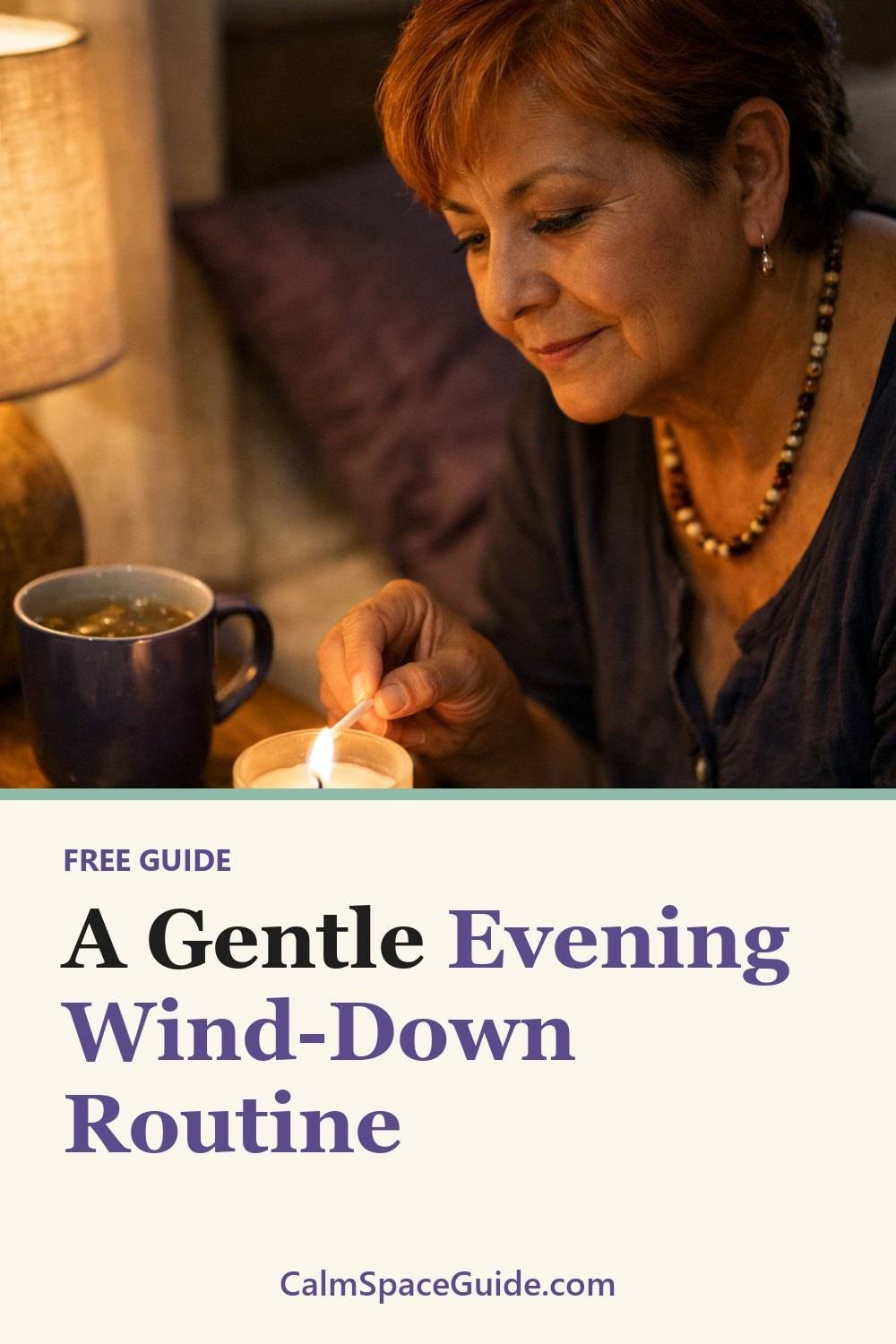
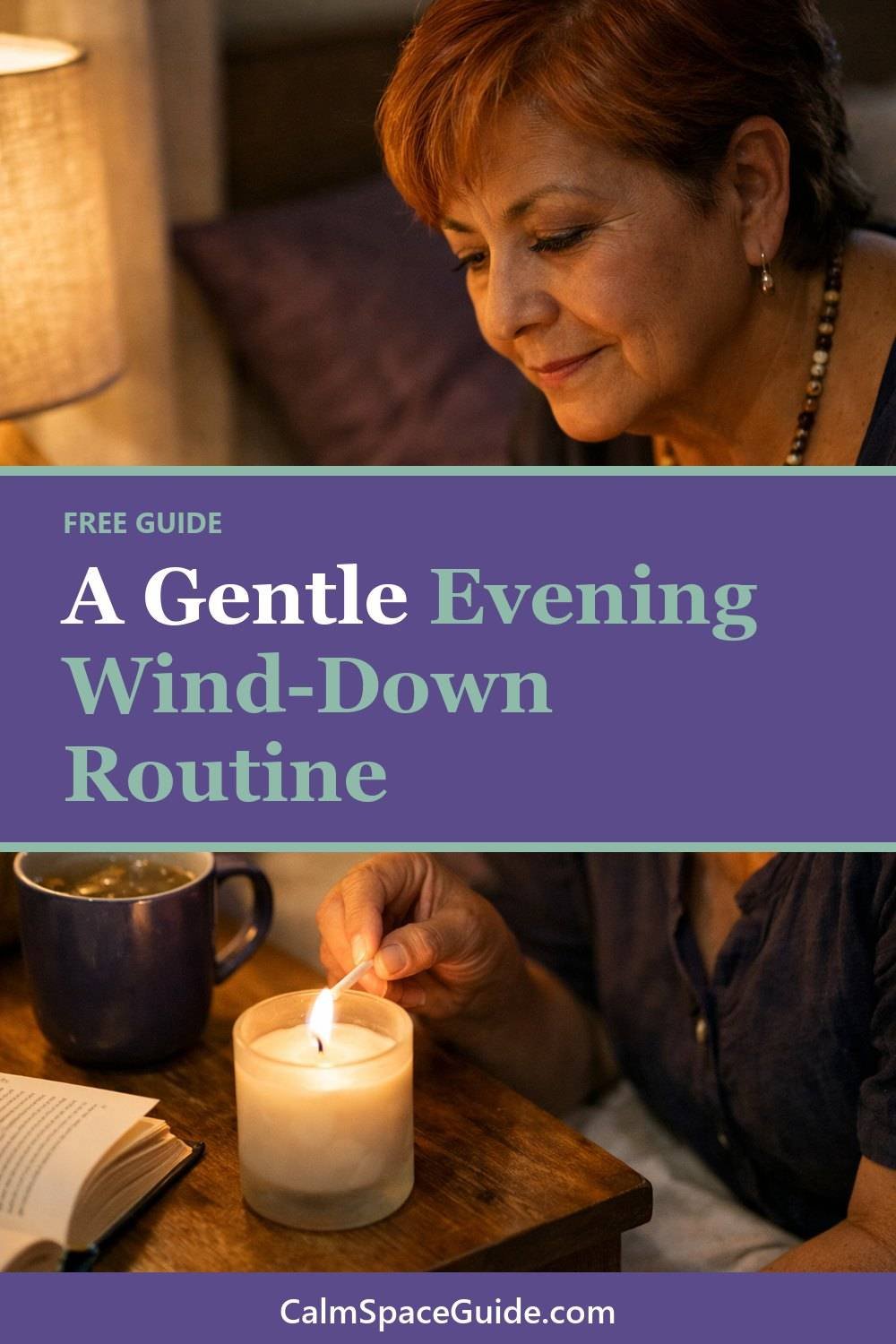
You don't need special bulbs or smart lights like Philips Hue for this. A table lamp, a small light in the hallway, or even the light over the stove can do the job. Candles can be lovely, but you may not want to use them every night if you get nervous about leaving them burning when you're sleepy.
This step is small, and that's why I like it. It's a signal. When the lights go soft, part of me knows the day is closing, even before I've done anything else.
Tidy just one surface
It's easy to think a calm evening means a fully clean home. That idea kept me cleaning until bedtime, which is the opposite of calm. Now I tidy one surface and stop.
Usually it's the kitchen counter or my bedside table. Set a timer for five minutes, clear what you can, and walk away when it rings. Even if the rest of the place is messy, waking up to one clear spot feels surprisingly good.
Here's what this looks like on a normal night for me. Put the mugs in the sink, stack the mail into one pile, and wipe the counter. That's it. Some nights I don't even finish, and I still count it.
Write a few lines in a daily mindfulness journal
This is the part of my routine I'd keep if I had to drop everything else. Write three short lines about what went well today. Not big things. Things like "my sister called," "the soup turned out nice," or "I took a walk at lunch."
On hard days, it's harder to find them. Those are the days I need it most. Even "I got through it" counts as a line.
Keep a notebook just for this, a simple gratitude journal for women and men alike, so you're not opening your phone again. If you'd like something ready to go, I made the Calm Space Journal and Log Book for exactly this kind of short nightly writing. It's below this post. Any plain notebook works too, such as one from Moleskine, and you don't need the best gratitude journal to begin. The habit matters more than the paper.
If you want to try it before buying anything, you can grab the Free 7-Day Gratitude Journal Pages, a gratitude journal printable, by joining the email list, and use them for your first week.
A few prompts to try when your mind goes blank:
- What made me smile today, even a little?
- Who was kind to me, or who was I kind to?
- What's one thing I handled better than I expected?
Stretch or breathe, slowly, the gentle yoga way
After writing, I spend a few minutes moving my body or just breathing. Nothing intense. If it feels like exercise, I'm doing too much.
Some nights I stretch on the floor next to the bed, and a meditation app like Insight Timer can be a gentle option if you want some guidance. Roll your shoulders, reach your arms up, and fold forward for a bit. Other nights I sit on the edge of the bed and breathe in slowly, then breathe out even more slowly. You can count to four going in and about six going out, but there's no magic number.
If you have pain, an injury, or a health condition, check with a doctor or physical therapist about what kind of stretching is right for you. This is general information about what can work, not medical advice.
What I'd skip: long guided videos at this stage of the night. Two or three minutes on your own can feel more restful than twenty minutes of following along.
Keep your evening wind down routine mostly the same each night
The real power of a routine comes from repeating it. When you do the same small steps in the same order, your body starts to expect sleep. It feels familiar, and familiar is easier.
That doesn't mean it has to be perfect. A simple order is: finish time, lamp on, tidy, write, stretch. When I'm out late, I might only do the writing and breathing. That still counts.
Try not to change the whole thing every week. It's tempting to keep adding new ideas you read about online. Doing that can make the routine so long that you stop doing it. Short and steady beats long and occasional.
Make an evening wind-down routine for busy people fit your real life
If you live with kids, a partner, or roommates, your evenings won't always be quiet. That's okay. You can shrink the routine down to what you control.
When my nephew stays over, my "routine" is three lines in my notebook while he brushes his teeth, and two deep breaths before I turn off his light. It's tiny, but it still helps me feel like the day had an ending.
Work shifts can change things too. If you work nights, your wind-down might happen in the morning. The steps still work. Only the clock is different.
A quick recap
A gentle wind-down doesn't need to be long or perfect. Set a finish time, soften the lights, clear one surface, write a few good things about your day, and spend a couple of slow minutes stretching or breathing. Then do it again tomorrow, even if it's a shorter version.
Tools and products that can support your evening routine
You don't need any of these to wind down, but a few simple tools can make the habit feel easier or nicer. Here are some well-known options, with who each one suits.
Insight Timer
A meditation and sleep app that suits people who want a range of short breathing or relaxation sessions. Check which features sit behind the paid tier before you decide you need it.
Calm
A mindfulness and sleep app that suits people who like guided sessions and bedtime audio. Check whether you'd rather use a screen at night, since you may want to keep your phone away from bed.
Headspace
A guided meditation app that suits beginners who want gentle structure. Try a short session first to see if the teaching style feels right for you.
Moleskine notebooks
A familiar notebook brand that suits people who like a sturdy, simple page for nightly writing. Check the paper type and size, and whether you want lined or blank pages.
Leuchtturm1917 notebooks
A notebook brand that suits people who like numbered pages and a tidy layout. Check whether the cover size is easy to keep on a bedside table.
Philips Hue lamps
A smart lighting line that suits people who want to dim and warm their lights on a schedule. Check that you really want to add a smart system, since a plain lamp does the same basic job.
Hatch Restore
A bedside light and sound device that suits people who want a gentle light, soft sounds and a wake-up light in one place. Check whether you need all of its functions, and whether a simple lamp would be enough.
Check current plans and prices on each brand's own site before you choose.
FAQ
How long should an evening wind down routine take?
Mine usually takes about 20 to 30 minutes, not counting the hour before bed where I avoid work. On busy nights it can be five minutes. Start with whatever amount of time you can actually keep up.
What if I forget to do it most nights?
That's really common, especially at first. Pick one step, like writing three lines, and attach it to something you already do, such as brushing your teeth. Once that sticks, add another step.
Do I need special products or mindfulness journals for this?
No. A lamp, a notebook, and a few minutes are enough. Products like a journal can make it feel nicer, but they aren't required.
Will this fix my sleep problems?
No routine can promise that, and nobody honestly can. A calm routine helps many people feel more settled at night, but if you're struggling with sleep for a long time, it's worth talking to a doctor.
If you'd like an easy place to start tonight, grab the Free 7-Day Gratitude Journal Pages by joining the email list, and use them for your three lines each evening. After a week, if you find you like the habit, take a look at the Calm Space Journal and Log Book below this post. There's also the Calm Practice Deal Alert Setup Kit down there if that's useful to you. Either way, I hope tonight ends a little more gently than last night did.
Printables and tools that can help
Calm Space Journal and Log Book
A printable journal interior to record your routines, thoughts and plans for a calmer...
See detailsCalm Practice Deal Alert Setup Kit
Daily, weekly and monthly gratitude journal pages to print at...
See details