Breathing Exercises for Beginners: Simple Steps and Tools

Breathing exercises are easy to start, and you do not need much to begin. This guide walks through a gentle routine step by step, then points to a few breathing exercise tools, such as printables, that can help you keep it up.
Slow breathing can feel calming for many people, and the best breathing exercise tools are surprisingly simple. Many people start after a friend or teacher shows them a simple count, and it can be learned in a few minutes at any table. It's fine to expect little at first. But two minutes later my shoulders had dropped a good inch, and I hadn't even noticed they were up near my ears.
If you've never tried a breathing exercise before, this post walks you through the basics. No special gear, no apps you have to pay for, no perfect posture, and no need for a yoga mat for beginners. Just you, a chair, and a few minutes. This post also covers common beginner mistakes, so you can skip those parts.
One quick note before we start: breathing exercises aren't a treatment for anything. If you have a heart or lung condition, asthma, panic attacks, or you're pregnant, it's a good idea to check with a doctor or other health professional before you try new breathing patterns.
Short on time? Our top picks: Insight Timer, Calm, Headspace and Apple Watch Breathe app. See all picks
Find a Comfortable Seat First (No Yoga Equipment Needed)
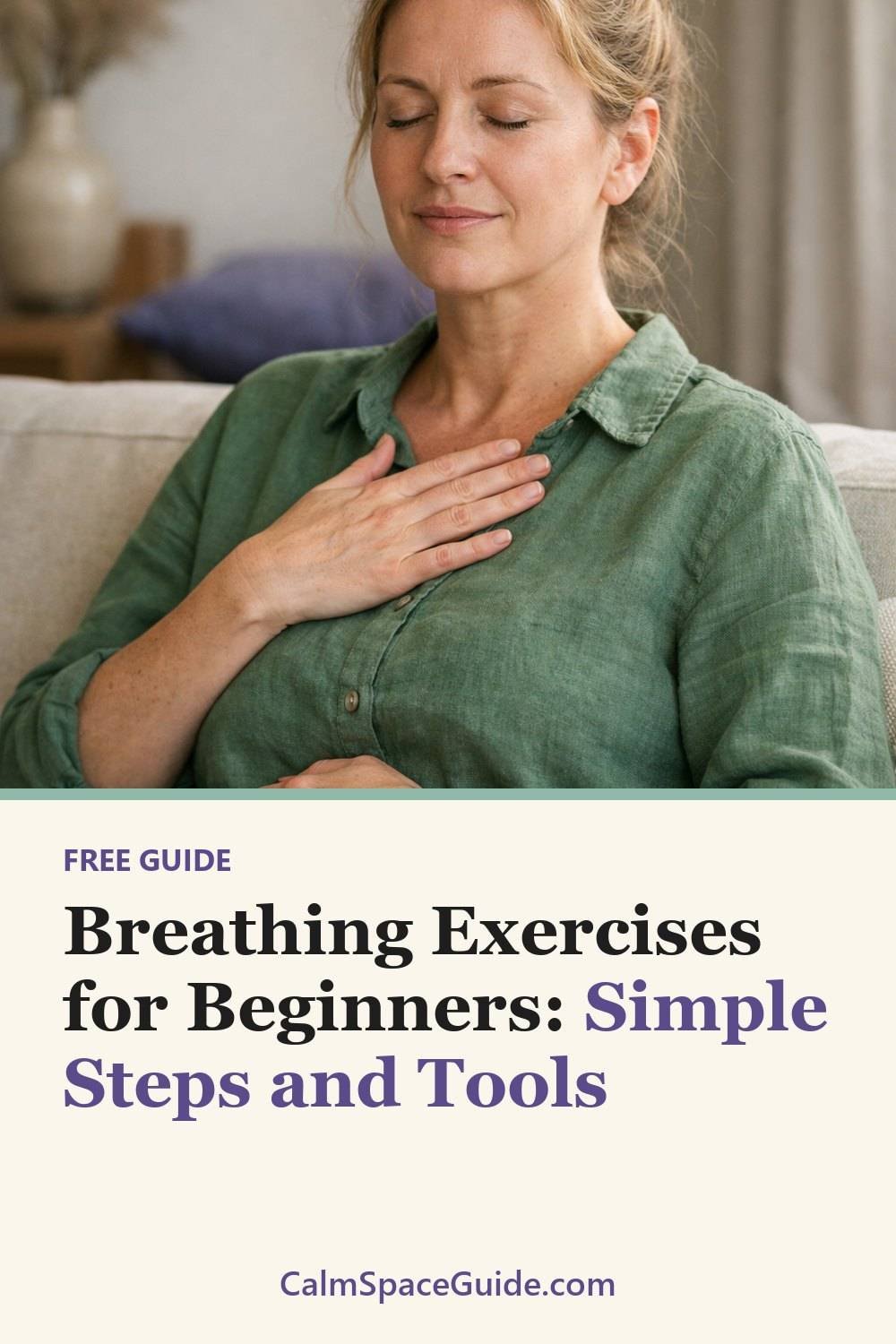
Sit somewhere your back is supported. A kitchen chair works. So does the corner of a couch, or your car seat when it's parked. You don't need to sit cross-legged on the floor like in a yoga class for beginners. Honestly, I think that's overrated for beginners. If your legs go numb, you'll spend the whole time thinking about your legs.
Here's what helps:
- Feet flat on the floor, if you're in a chair
- Hands resting on your thighs or in your lap
- Shoulders loose, not pulled back like a soldier
- Eyes closed, or looking softly at a spot on the floor
You can lie down too. Just know that lying down makes some people fall asleep. That's fine at bedtime. Less fine before a work call.
Breathe In Gently Through Your Nose
Close your mouth and let the air come in through your nose. Don't suck it in hard. Think of smelling soup that's still a bit too hot. Easy and slow.
A lot of beginners try to fill their lungs all the way to the top. It's easy to keep doing this for weeks without noticing. It made me feel tight and a little light-headed, which is the opposite of the point. You only need a normal-sized breath, just slower than usual.
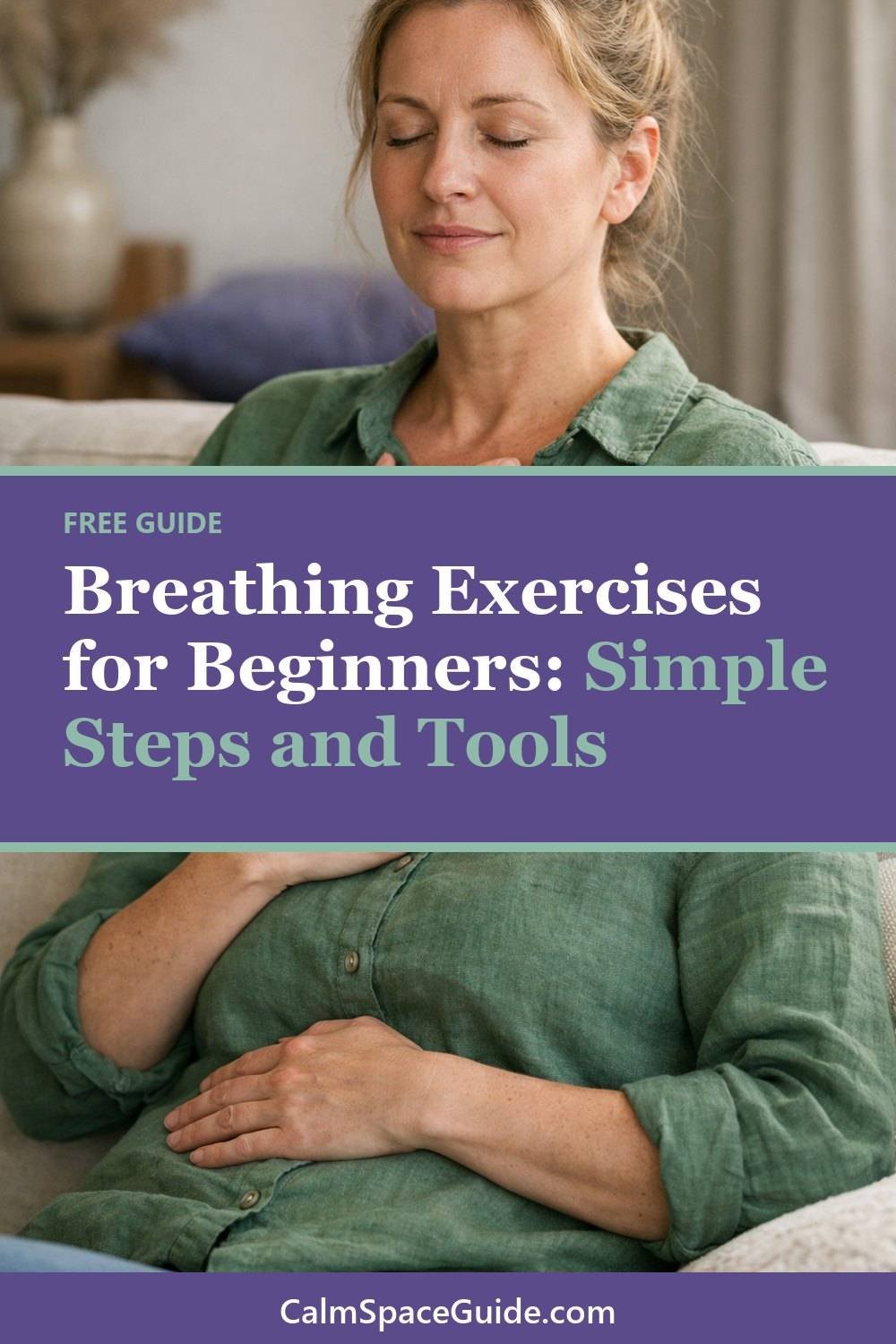
If you want to check what's moving, put one hand on your chest and one on your belly. Many people find that letting the belly rise a little feels more relaxed than lifting the chest. Don't force it, though. Just notice.
If your nose is stuffed up, breathing in through your mouth is okay. The slow pace matters more than which hole the air goes through.
Let the Breath Out a Little Longer
This is the part that made the biggest difference for me. When you breathe out, take a bit more time than you did breathing in. You can breathe out through your nose, or through your mouth with your lips slightly apart, like you're cooling a spoonful of tea.
The out-breath shouldn't feel like you're squeezing every last bit of air out. If you get to the end and feel a pinch or a gasp coming, you went too long. Shorten it next time.
It can help to picture the air leaving like sand running out of a small hourglass. Steady, not rushed. You might notice your jaw unclench or your hands go heavier. Or you might notice nothing at all the first few times. Both are normal.
Try a Soft Count: Four In, Six Out
Counting gives your mind something simple to hold onto, which is a gentle way into mindfulness for beginners. A common beginner pattern is to breathe in for a count of four and out for a count of six. Count in your head, not out loud, and keep the numbers gentle.
Here's how one round might go:
- Breathe in through your nose: one, two, three, four.
- Breathe out slowly: one, two, three, four, five, six.
- Pause for a second if it feels natural, then start again.
Your counts don't need to match a clock. Your "four" may be faster or slower than someone else's, and that's fine. If four and six feel like too much, try three in and four out. The goal is that the out-breath is a little longer and nothing feels strained.
Some people like to say a word instead of numbers, like "in" and "out," or "soft" and "slow." If you keep losing track that way, going back to counting is a simple fix. Pick whatever keeps your attention without effort.
If you like writing things down after quiet moments like this, you can grab our Free 7-Day Gratitude Journal Pages by joining the email list.
Stop If You Feel Dizzy or Uncomfortable
This one matters. If you feel dizzy, tingly, short of breath, or your heart starts racing, stop the exercise. Go back to breathing the way you normally do. Open your eyes, look around the room, and give it a minute.
Dizziness usually means you're breathing too deep or too long for your body right now. It's not a sign that you're bad at this. Next time, take smaller breaths and use shorter counts.
Breathing exercises should feel comfortable. If something feels wrong more than once, or you have ongoing symptoms, talk to a health professional. Don't push through it just because a guide (including this one) told you to try.
Keep Your Sessions Short, Even as a Beginner
Two minutes is plenty when you're starting. Really. Many beginners think they need twenty minutes for it to "count," and that idea can stop them from doing it at all. Even a minute or two is a fine place to start. Two minutes you actually do beats twenty minutes you keep putting off.
Some easy times to fit it in:
- While the kettle boils
- In the car before you walk into work
- After you close your laptop for the day
- Right before you turn off the light at night
Set a gentle timer on your phone, or use a meditation app such as Insight Timer, if you don't want to keep checking. Once two minutes feels easy, you can stretch to three or five. There's no rush to go longer.
Small Habits That Help It Stick
The hard part isn't the breathing. It's remembering to do it. What worked for me was tying it to something I already did every day. Coffee in the morning became coffee plus two minutes of slow breathing before the first sip.
It also helps to jot a quick note afterward, even in a plain notebook like a Moleskine. Nothing fancy. "Felt calmer" or "mind wandered a lot" is enough. Over a couple of weeks, you start to see which times of day suit you best. If you want something with prompts already set up, the Guided Breathing and Journal Tool below this post pairs short breathing practices with simple journal pages. And if your stress mostly comes from work, The Calm Professional's Starter Guide, also below, has ideas for building calm breaks into a busy day.
What I'd skip: fancy breathing gadgets and yoga equipment for beginners you don't need, plus any method that promises big changes overnight. Keep it plain. Plain is easier to repeat.
Tools and Apps Worth a Look
You don't need any of these to start, but a few simple tools can make a two-minute habit easier to keep. Here are some well-known options for different kinds of beginners.
Insight Timer
A good fit if you want a wide choice of guided breathing and meditation sessions from many teachers. Check which features sit behind a paid membership before you count on them.
Calm
Suits people who like a polished app with guided sessions and breathing prompts in one place. Check how much of the content is free and whether the style of narration feels soothing to you.
Headspace
Suits beginners who like a structured, step-by-step approach to mindfulness. Check whether the course format fits your schedule, since some people prefer something more casual.
Apple Watch Breathe app
Suits people who already wear an Apple Watch and want a gentle reminder to pause. Check that your model and software support it, and whether you actually like wrist taps as a prompt.
Balance
Suits people who want a meditation app that adjusts sessions to their experience level. Check what is included at the free level and whether the session lengths suit a short daily habit.
Moleskine Notebooks
Suits anyone who wants a simple place to jot a line or two after each session. Check the paper type and size, since a notebook you find pleasant to hold is one you will actually pick up.
Please check current plans and prices on each brand's own site before you decide.
FAQ
How often should a beginner practice?
Once or twice a day is a nice place to start, for about two minutes each time. Some people prefer doing it only when they feel tense. Try both and see what fits your life.
Is it normal for my mind to wander during mindful breathing?
Yes, completely. Mine still wanders most days. When you notice it, just go back to your count without scolding yourself.
Should I breathe through my nose or my mouth?
Breathing in through the nose feels gentler for many people, and breathing out through either is fine. If your nose is blocked, use your mouth. A slow, easy pace matters more than the exact method.
Can breathing exercises replace medical care?
No. They can be a nice part of a calm routine, but they aren't a treatment for any health condition. If you're dealing with anxiety, breathing problems, or other health worries, please talk to a doctor or qualified professional.
A Quick Recap
Sit with your back supported. Breathe in gently through your nose, then let the breath out a little longer. A soft count of four in and six out works for many people, but adjust it to feel easy. Stop if you feel dizzy. And keep it short, around two minutes, so it's simple to come back to tomorrow.
If you'd like a small next step, sign up for the Free 7-Day Gratitude Journal Pages in the box on this page. They're a gentle way to pair a few quiet breaths with a few kind words each day. After that, take a look at the Guided Breathing and Journal Tool and The Calm Professional's Starter Guide below this post, and see if either one feels like a good fit for you.
Breathing exercise tools and printables that can help
Guided Breathing and Journal Tool
A browser tool with a simple breathing circle and a journal. One HTML file, no account, your entries stay in...
See detailsThe Calm Professional's Starter Guide
A plain-English starter guide to simple mindfulness habits. General information only, not medical or...
See details