A Gentle Evening Wind-Down Routine
Published 2026-10-15
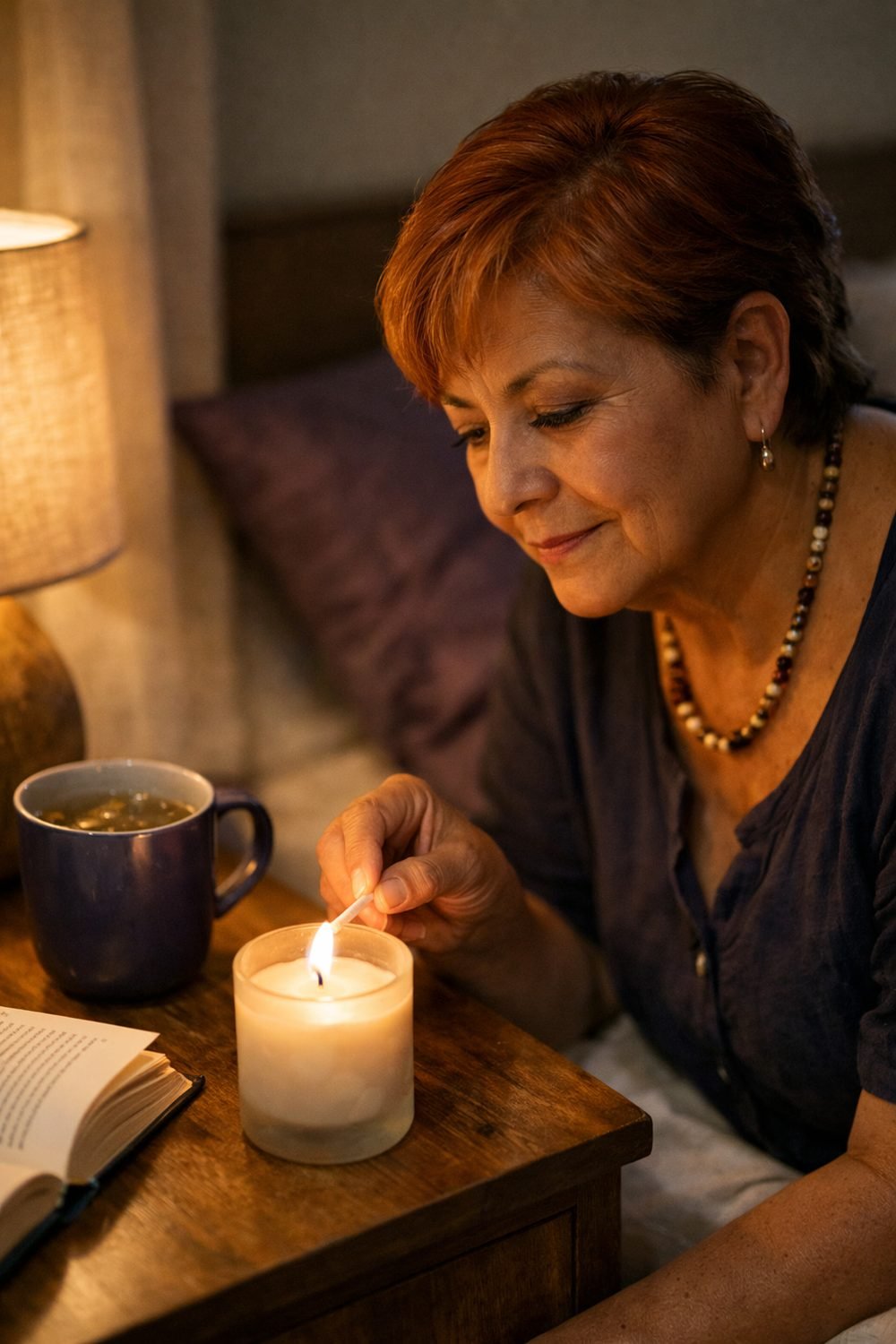
Whether you are in gentle yoga teacher training or simply have a busy day behind you, a short evening wind-down routine can help you shift toward rest. This post walks through a simple routine in four small parts, so you can copy it and adjust it to suit your evenings.
What finally helped wasn't anything fancy, and it had nothing to do with gentle yoga teacher training or a long practice. It was a short wind-down routine. Not an hour of candles and bath salts. Just fifteen minutes or so of doing a few calm things in the same order most nights.
If you go straight from screens and chores into bed, this post is for you. This post covers four simple parts, a sample routine you can copy, and the honest stuff worth skipping.
Short on time? Our top picks: Moleskine Notebooks, Leuchtturm1917 Notebooks, Headspace and Insight Timer. See all picks
Why a routine helps at all
Think about how a kid's bedtime works. Bath, pajamas, story, lights out. After a while, the story itself starts to make them sleepy. The order of things becomes a signal.
Adults aren't that different. When you repeat a calm sequence most evenings, your brain starts to link those steps with the end of the day. Over time, the routine becomes a cue to relax, and you don't have to force it as much.
One thing is worth making clear. This is a general wellbeing idea, not medical advice. People are different. What settles me might bore you, or the other way round. Treat everything here as something to try, not a rule.
Part one: wrap up the day
This takes about three minutes, and for me it does the most work.
Grab a notebook, such as a Moleskine, or one of the mindfulness journals you already own, and write down anything still bouncing around your head. The bill you need to pay. The text you forgot to answer. That weird thing your coworker said. Don't organize it. Just get it out.
Then write your top three priorities for tomorrow. Only three. Writing a list of ten often just makes you anxious as you look at it.
There's something about seeing thoughts on paper that makes it easier to leave them there. You're not ignoring them. You've just parked them somewhere safe until morning.
Small tip: keep the notebook and a pen in the same spot every night. If you have to hunt for a pen, you'll skip this step. It is easy to fall into this, and many people do it again and again.
Part two: dim the lights and quiet things down
Next, spend a few minutes making your home feel like evening. Turn off the big overhead lights and use a lamp instead, perhaps a dimmable smart bulb like Philips Hue. Lower the TV, or turn it off. If someone else in the house is still busy, you might just close a door.
Then the hard one. Put your phone on a charger away from where you relax. Not on the arm of the couch. Not under your pillow. Across the room, or in the kitchen if you can manage it.
Many people find that stepping away from screens helps them feel calmer. This is the step many people resist the most. The first few nights, I kept walking over to "just check the time." What helped was a cheap little alarm clock, so I had no excuse.
If leaving your phone behind feels impossible right now, try turning on a night or grayscale mode and closing all your apps. It's not perfect, but it's a start.
Part three: pick one gentle activity
This is the part you get to enjoy. Give yourself five to ten minutes for something quiet. Here are a few ideas:
- Gentle stretching, like reaching for your toes or rolling your shoulders
- A short meditation or slow breathing, with an app like Insight Timer if you like guidance
- Reading a few pages of a paper book
- Writing a few lines in a daily mindfulness journal
- A warm drink, such as a caffeine-free herbal tea
You don't need all of these. Pick one, maybe two. A simple option is a few stretches on the floor, then slow breathing where you breathe in for a count of four and out for a count of six. Nothing clever. It just gives my mind something simple to hold on to.
A word on herbal teas: if you have a health condition, take medication, or are pregnant, check the label and ask a pharmacist or doctor before trying new ones. Some herbs don't mix well with certain medicines.
What would I skip? Guided videos that need your phone. A common mistake is picking a calming activity, then "just quickly" checking messages afterward. A book or notebook doesn't have that trap.
Part four: get tomorrow ready
Two minutes, tops. Lay out your clothes. Pack your bag. Put your keys where you'll find them. Wipe the kitchen counter, or tidy one small corner.
It sounds almost too small to matter. But there's a real ease in knowing the morning won't start with a frantic search for a matching sock. Your future self will thank you, usually around 7:15 a.m.
A 15-minute wind-down routine for gentle yoga teacher training evenings
If you'd like something to start with, here's what a typical weeknight looks like for me:
- 3 minutes: brain dump and tomorrow's top three
- 2 minutes: lower the lights, phone on the charger in the kitchen
- 7 minutes: a few stretches, then slow breathing
- 3 minutes: three lines in a gratitude journal
That last step is newer for me, and a simple gratitude journal printable made it easy to begin. You can write down three small good things from the day. Some nights it's big, like a nice talk with a friend. Most nights it's "the bus was on time" or "good soup." It still counts. If you'd like a simple way to try this, you can grab our Free 7-Day Gratitude Journal Pages from the sign-up box on this page.
Feel free to swap steps around. Some people prefer to prep for tomorrow first, then do the calm stuff last. That's fine. The order you'll actually stick with is the right order.
Making it stick (and what to cut back on)
Honestly, starting is easy. Keeping it going is where most of us slip. A few things that helped me:
- Start with one or two steps. You can add more later, once those feel normal.
- Aim for roughly the same time. It doesn't need to be exact. Within half an hour is plenty.
- Do the short version on busy nights. Got home late? Just do the brain dump and dim the lights. A little beats nothing.
- Make your space nice to be in. Soft lighting, a tidy-ish room and a comfortable temperature go a long way.
As for what to ease off on close to bedtime, the usual suspects are bright screens, heavy meals and stressful conversations. The last one matters because a late-night argument about holiday plans can keep you up for hours. Now, if a tough talk comes up after nine, I'll say, "Can we pick this up tomorrow?" It works more often than you'd expect.
Everyone reacts differently, though. Pay attention to what affects you, and adjust.
When a routine isn't enough
If you regularly have trouble falling asleep or staying asleep, please talk to a doctor or another qualified professional. A wind-down routine is a general relaxation habit. It's not a treatment for any sleep problem or health condition, and you deserve proper support if something more is going on.
Tools that can make your wind-down easier
You don't need any of these, but a few simple tools can make the routine easier to stick with. Here are some well-known options that fit the steps above.
Moleskine Notebooks
A good fit if you like a classic paper notebook for your evening brain dump. Check the paper type and page layout (ruled, dotted or plain) so it suits how you like to write.
Leuchtturm1917 Notebooks
Suits people who like numbered pages and a tidy structure for daily lists. Look at the size and whether you want a lay-flat style before choosing.
Headspace
A meditation and mindfulness app that suits beginners wanting guided breathing or short sessions. Since it lives on your phone, decide in advance how you'll avoid drifting into other apps.
Insight Timer
A meditation app that suits people who like choosing from many different teachers and styles. Check which features are free and which need a paid plan.
Calm
An app for relaxation, breathing and soothing audio. It suits those who want a lot of quiet content in one place, but check whether you'd rather keep your phone out of the bedroom.
Philips Hue Smart Lighting
A good match if you want to dim lights and warm up the room with an app or voice control. Check that it works with your existing lamps and home setup first.
Twinings Herbal Teas
A familiar choice for a caffeine-free warm drink. Read the ingredient list, and check with a pharmacist or doctor if you take medication or have a health condition.
Check current plans and prices on each brand's own site before you decide.
FAQ
How long should a wind-down routine be?
There's no set number. Fifteen minutes is often enough to feel a difference without it becoming a chore. Start shorter if that's what fits your evenings.
What if I miss a night?
Then you missed a night, and that's okay. Just pick it back up the next evening. Skipping one night doesn't undo the habit you're building.
Can I watch TV as part of my routine?
You can, if it truly relaxes you. A better approach is to put it earlier in the evening and keep the last few minutes screen-free. Notice how you feel and decide from there.
Do I need special products, like the best gratitude journal?
Not at all. A notebook, a pen and a lamp will cover most of it, and a gratitude journal for women or men is a nice extra, not a must. Fancy gear is nice, but it's not what makes a routine work.
A quick recap
Wrap up your thoughts on paper, ideally in a journal you enjoy opening. Dim the lights and park your phone. Do one calm thing you enjoy. Get tomorrow ready. Keep it short, keep it kind, and change anything that doesn't feel right for you. Try it for a week or two, then keep whatever you look forward to.
If you want an easy first step tonight, sign up for the Free 7-Day Gratitude Journal Pages using the box on this page. Print a page, set it next to your bed, and write three small good things before lights out. That's it. That's your start.
Some links on this site may earn us a commission. Read our disclosure.