Beginner Mindfulness Routine Checklist: What to Try First

A short routine is easier to keep, especially with mindfulness for beginners. That's the whole secret, honestly. When I first tried mindfulness, I set myself a 30-minute morning sit, bought a cushion, and quit by day four. What finally stuck was a tiny checklist I could finish while the kettle boiled.
This guide is that checklist, plus everything I wish someone had told me at the start. You don't need special gear, a quiet house, or a calm personality. You need a few minutes and a willingness to be a little bad at it for a while.
Short on time? Our top picks: Headspace, Calm, Insight Timer and Smiling Mind. See all picks
Quick summary
- Start with 2 to 5 minutes a day, not 20.
- Tie your practice to something you already do, like brushing your teeth or making coffee.
- Begin with simple breath counting before trying longer body scans.
- Add one "mindful task" during your day, such as eating the first few bites of lunch slowly.
- Use a short evening check-in, like writing down one good thing from the day.
- Expect your mind to wander. Noticing it wander is the practice.
- Track days, not quality. A messy two minutes still counts.
- Try each piece for about a week before adding the next one.
Why a Small Routine Beats a Big Plan for Mindfulness for Beginners
Most beginners make the same move I did. They get excited, plan something ambitious, and then life gets in the way. A missed day turns into a missed week, and suddenly mindfulness feels like one more thing you failed at.
A small routine works differently. Two minutes is so easy that skipping it feels a bit silly. And once something feels easy, you start doing it without arguing with yourself.
The "too easy" test
Here's a trick I still use. Before you commit to any habit, ask: "Could I do this on my worst day?" Picture a day where you slept badly, the kids were loud, and work ran late. If your plan still fits into that day, it's the right size. If not, cut it in half.
What small actually looks like
For me, small meant ten slow breaths before I opened my phone in the morning. That's it. Some days I counted to ten and lost track at four. Ticking the box still counts, even on a rushed day. After about a month, I wanted more, so I added more. That order matters. Want first, then add.
Step 1: Pick an Anchor for Your Practice
An anchor is something you already do every day without thinking. You attach your new habit to it, so you don't have to remember a separate time.
Good anchors to try
- Right after you turn off your alarm
- While your coffee or tea brews
- After you park the car, before you walk inside
- Right after brushing your teeth at night
- When you sit down at your desk
Many of these are worth trying. The coffee one won for me, because the wait is already built in. You're standing there anyway, so you might as well breathe on purpose.
Morning or evening?
People argue about this a lot. The honest advice: pick whichever one you're less likely to skip. Mornings can be great because the day hasn't gotten messy yet. But if you're the type who hits snooze three times and rushes out the door, a morning plan will probably fall apart.
Evenings are calmer for some people, though you might be tired and drift off. That's fine too, really. Falling asleep during a breathing exercise isn't the worst outcome in the world.
Step 2: The Two-Minute Breath
This is the first real practice on the checklist, and I'd stay with it for at least a week before adding anything.
How to do it
- Sit or stand somewhere you won't be bumped into. A chair is fine. So is the kitchen counter.
- Let your shoulders drop. Most of us carry them up near our ears without noticing.
- Breathe in through your nose at a normal pace. Don't force it deep.
- Silently count "one" on the out-breath.
- Keep going up to ten, then start again at one.
- When you lose count (you will), just start over at one. No scolding.
Two minutes usually gets you through two or three rounds. Set a gentle timer if you like, so you're not checking the clock.
What it feels like at first
Honestly? Kind of boring, and a bit fidgety. The first few times, I kept thinking about my grocery list. It's easy to get to three and suddenly be planning dinner. That's normal. The moment you realize "oh, I wandered off" and come back to counting, that's the actual exercise. It's like a rep at the gym. Each return is one rep.
Counting vs. just noticing
Some guides say to simply "notice the breath" without counting. That can feel too vague for a beginner. Counting gives your busy brain a small job. Once counting feels easy, you can drop the numbers and just feel the air moving in and out. Try both and see which one keeps you more present.
Step 3: A Short Body Scan Meditation
After a week or so of breathing, a body scan is a nice next step. It's a way of moving your attention slowly through your body and noticing what's there, without trying to fix anything.
The beginner version (about 5 minutes)
Lie down or sit comfortably. Start at your feet. Notice if they feel warm, cold, heavy, tingly, or nothing at all. "Nothing" is a perfectly good answer. Then move to your lower legs, your knees, your thighs, and so on, all the way up to the top of your head.
Spend about 20 or 30 seconds on each area. You don't need to be exact.
Why I like it more than I expected
It's easy to skip body scans because they can sound a little too soft. Then one night I couldn't sleep and tried one. You might find your jaw is clenched tight, something you hadn't noticed at all. Just noticing let it loosen. Now I do a quick scan most nights in bed.
A note here: if any part of your body is in pain, or paying attention to a certain area feels upsetting, you can skip it and move on. If pain or strong feelings keep coming up, it's worth talking to a doctor or a qualified therapist.
Step 4: One Mindful Moment in Your Day
Formal practice is good, but the real point is bringing a bit of that attention into normal life. This step doesn't take any extra time at all. You just do something you already do, slowly and on purpose.
Ideas that work well
Eating: Take the first three bites of one meal slowly. Notice the taste, the texture, the temperature. Put your fork down between bites. You can eat normally after that.
Washing your hands: Feel the water. Notice the soap smell. This one's great because you do it many times a day.
Walking: On the way to your car or the bus stop, feel your feet hitting the ground. Left, right, left.
Doing dishes: Warm water, the weight of each plate. Dishes can feel like a chore, but they also make an easy mindfulness practice. You may not love them at first, but they tend to bother you less over time.
Pick one, not all of them
It's tempting to try everything at once. Don't. Pick one activity and stick with it for a week. If you try to make every meal and every walk "mindful," you may end up feeling like you're failing at all of them.
Step 5: A Gentle Evening Check-In
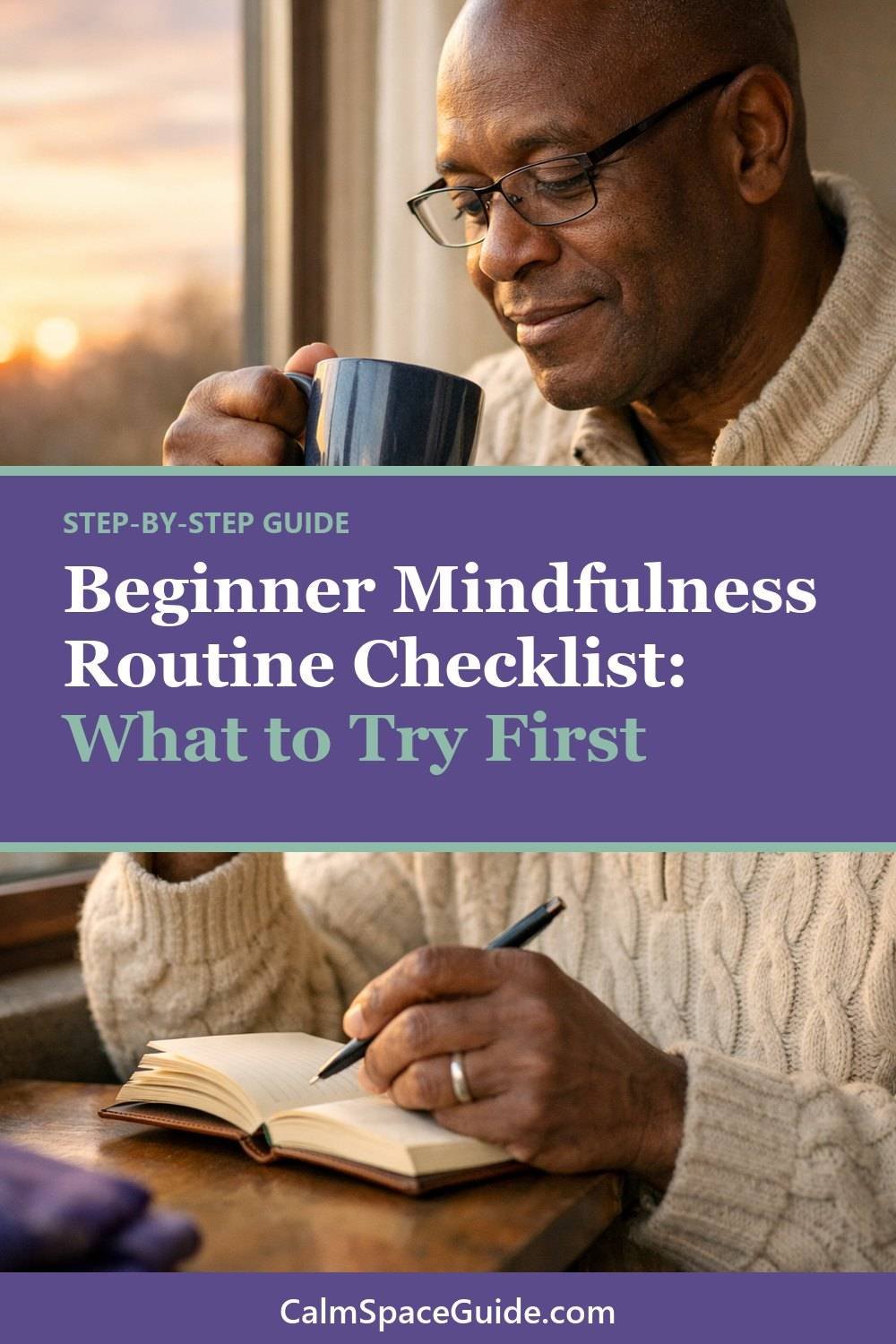
The last piece of the beginner checklist is a short wind-down at the end of the day. This helps close the day instead of letting it blur into scrolling on your phone.
The one-good-thing habit
Before bed, write down one good thing that happened. It can be tiny. "The bus was on time." "My neighbor waved." "The soup was really good." The point isn't to pretend everything is great. It's to train your attention to catch good moments, which are easy to miss on hard days.
If you'd like a little structure, like you'd get from mindfulness journals, you can grab our Free 7-Day Gratitude Journal Pages by joining the email list in the sign-up box on this page.
Paper, phone, or mindfulness journals?
Paper is a good choice for this one. If you use a notes app, it's easy to open your phone to write and then "just check" messages. Ten minutes later, no note, lots of scrolling. A small notebook by the bed fixed that. If phones work for you, though, go for it. The best tool is the one you'll actually use.
Comparing Your Options: What to Try and What to Skip
There's a lot of mindfulness stuff out there, from the best mindfulness books to every online mindfulness course, and it's easy to get distracted by it. Here's how a few common choices stack up for beginners.
Apps vs. no apps
Guided apps such as Headspace or Insight Timer can be helpful when you're starting out, because a calm voice tells you what to do. The downside is that some of them push streaks, badges, and reminders that can make the whole thing feel like a chore. You might use one for a few weeks, then mostly stop. It can help to pull one up on stressful days. If you try an app, check its pricing and features on the seller's own page, since those can change.
Going without an app is free and simple. A timer on your phone, set to silent, works just fine.
Sitting vs. walking practice
Sitting is the classic version, and it's good for building focus. But if you get restless or sleepy, walking slowly while noticing your steps can be easier. Walking practice is an option on days when sitting still feels impossible. Neither is "more real" than the other.
What I think is overrated
Fancy cushions, special music, candles, and perfect quiet. They're nice, but none of them matter much at the start. A meditation cushion is easy to buy in your first week and then leave sitting in the corner. A kitchen chair did the job. Spend your energy on showing up, not shopping.
What I think is underrated
Doing it badly on purpose. Seriously. Telling yourself "today I'll do a sloppy two minutes" takes off so much pressure. Most days, the sloppy version turns out fine.
A Sample First Month
Here's roughly how I'd spread out the checklist. Adjust as you go. If week two feels like too much, stay at week one longer. There's no prize for speed.
Week 1
Two-minute breath each day, tied to your anchor. That's all.
Week 2
Keep the breath. Add your one mindful moment, like slow first bites at lunch.
Week 3
Keep both. Add the one-good-thing note before bed.
Week 4
Try a five-minute body scan a few times this week, maybe in place of the breath on some days. Notice which practices you look forward to and which feel like homework. Keep the ones you like.
By the end of the month, you might be doing about ten minutes a day spread across a few moments. Some people want more after that. Some are happy right there. Both are fine.
Common Mistakes Beginners Make
These are all common mistakes. Some of them more than once.
Trying to "empty" your mind
This is probably the biggest myth. Mindfulness isn't about having no thoughts. It's about noticing thoughts without getting swept away by them. If you think you're failing because thoughts keep showing up, you're actually doing it right.
Starting too big
Twenty minutes on day one sounds noble. It usually lasts about as long as a New Year's gym plan. Start tiny and let it grow.
Judging each session
"That one was bad" is a thought worth noticing, too. Some sessions feel calm. Others feel like trying to hold a puppy still. Both count. Try not rating your sessions, since it can make them a lot more enjoyable.
Quitting after a missed day
You'll miss days. Everyone does. The trick is to not miss two in a row if you can help it. And if you miss a whole week, just start again with two minutes. No catch-up needed.
Expecting it to fix everything
Mindfulness can help you feel a bit steadier, but it's not a cure for everything. If you're dealing with ongoing anxiety, low mood, or anything that's getting in the way of your life, please talk to a doctor or mental health professional. A breathing practice can sit alongside real support. It shouldn't replace it.
Collecting books and techniques instead of practicing
Reading about mindfulness, like a favorite mindfulness workbook or a classic such as The Miracle of Mindfulness, can feel productive. It's easy to spend weeks reading articles and watching videos without actually sitting down once. Information is nice, even mindfulness training online, but two minutes of practice teaches you more than an hour of reading.
Tools Worth Considering for a Beginner Mindfulness Routine
You don't need any of these to start, but a few can make the first weeks easier. Here are some well-known options, with a note on who each one suits.
Headspace
A guided meditation app that suits beginners who like a friendly voice walking them through each session. Check whether its reminders and streak features feel motivating or pushy to you.
Calm
An app with guided meditations, sleep content and music, which suits people who want help winding down at night. Look at how much of the content you would actually use before deciding it is worth it.
Insight Timer
A meditation app with a large library of guided sessions from many different teachers, plus a simple timer. It suits people who like to try different voices and styles. Check which features sit behind a paid plan.
Smiling Mind
A mindfulness app from a not-for-profit organization, which suits beginners who want a straightforward, low-pressure place to start. Check that its session styles and lengths fit your routine.
Ten Percent Happier
An app and course platform that suits skeptical beginners who want a practical, down-to-earth approach. Check how much of the course content is available on the plan you choose.
The Miracle of Mindfulness
A classic short book by Thich Nhat Hanh, good for readers who prefer a gentle introduction on paper. Remember that reading is no substitute for practice, so keep your two minutes going alongside it.
Apple Watch Breathe app
A built-in breathing reminder tool on Apple Watch, which suits people who already wear one and want a nudge during the day. Check that the reminders do not feel like another notification to ignore.
Check current plans and prices on each brand's own site before you sign up or buy.
FAQ
How long before I notice a difference?
It's different for everyone, and I can't promise any specific result. One thing you may notice after a few weeks is catching yourself sooner when you get wound up. It was small, but it was real.
What if I fall asleep during practice?
It happens a lot, especially with body scans at night. If you want to stay awake, try sitting up instead of lying down, or practice at a different time of day. If you're using it to help you sleep, falling asleep isn't really a problem.
Do I need to sit cross-legged on the floor?
Not at all. A regular chair with your feet flat on the floor works great. Standing, lying down, and walking are all fine too. Comfort matters more than looking the part.
Is it okay to use guided recordings or a mindfulness meditation course forever?
Yes. Some people always prefer a guide, and that's perfectly fine. You might enjoy trying a few quiet, unguided minutes now and then, just to see how it feels on your own.
Your Next Step
Pick your anchor today. Just one. Tomorrow, when that moment comes around, take two minutes and count your breaths. That's the whole first step, and it's enough. When you're ready to add the evening check-in, grab the Free 7-Day Gratitude Journal Pages from the sign-up box on this page. They'll give you an easy place to write your one good thing each night for a week. Start small, be kind to yourself on the messy days, and see how it goes.
1. Pick one time of day
Morning or evening.
2. Start with five minutes
Sit, breathe, notice.
3. Keep a page nearby
Write three lines of gratitude.
4. Tidy one small space
Five minutes.
5. Be kind about missed days
Begin again tomorrow.
6. Read the seller's page
Before buying any gear.
Ready to look?
This is an affiliate link. Prices and terms change, so check the seller's page. This is general wellbeing information, not medical or mental-health advice.
Want a printable to keep track while you work? Get our free 7-day gratitude journal pages.